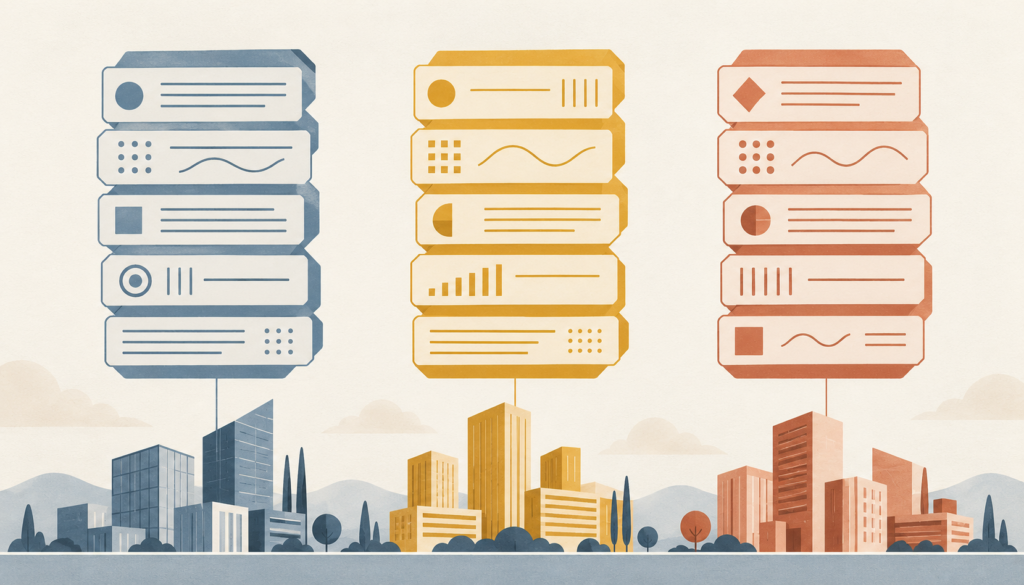
Every B2B mailing list is built on some kind of industry classification. The three systems most commonly used in US B2B data are SIC codes (the oldest), NAICS codes (the current US standard), and modern vendor-specific industry codes (used by LinkedIn, ZoomInfo, Dun and Bradstreet and others). Each uses a different taxonomy, assigns businesses differently, and produces different list output when used for targeting.
In 2026, choosing the wrong classification system for your B2B outreach can cost you 30 to 50 percent of your addressable audience, or load your list with the wrong industries entirely. This guide explains the three systems, when to use each, and how most sophisticated B2B buyers combine them.
SIC Codes: The Legacy System
The Standard Industrial Classification (SIC) system was developed by the US government in 1937 and last meaningfully updated in 1987. It uses a four-digit numeric code that groups businesses into about 1,000 industry categories across ten high-level divisions.
Example: SIC 5812 is Eating Places (all restaurants, from fast food to fine dining). SIC 7389 is Services-Business Services, Not Elsewhere Classified (a catch-all that includes everything from staffing agencies to marketing consultants).
SIC was officially retired by the US government in 1997 in favor of NAICS, but it survives in commercial data because it is the longest-running US industry classification and most legacy B2B databases are indexed by SIC. Many B2B mailing lists still ship with SIC as the primary classification field.
When SIC Still Works Best
SIC is still the most reliable system for older or more traditional industries where business categorization has not changed in forty years. Manufacturing, construction trades, retail, and wholesale are categories where SIC and NAICS produce similar list output.
SIC also still has the broadest coverage. US B2B databases built from legacy sources (business filings, Dun and Bradstreet, Experian) have SIC codes on virtually every record. Match rates on SIC-based queries are near 100 percent of US business records.
Where SIC Falls Short
SIC predates the entire modern service economy. There is no SIC code for software-as-a-service, no SIC code for digital marketing agencies, no SIC code for e-commerce. Businesses in these verticals are typically dumped into catch-all categories like SIC 7389 (Business Services NEC) alongside hundreds of unrelated businesses.
If your target audience is a modern service business, SIC will give you a list that is 60 to 70 percent irrelevant.
NAICS Codes: The Current US Standard
The North American Industry Classification System (NAICS) replaced SIC in 1997 and is jointly maintained by the US, Canada, and Mexico. It uses a six-digit hierarchical code and is updated every five years, with the most recent revision being NAICS 2022 (still in use through 2026).
Example: NAICS 722511 is Full-Service Restaurants, distinct from 722513 (Limited-Service Restaurants) and 722515 (Snack and Nonalcoholic Beverage Bars). The same restaurants that all shared SIC 5812 are now split into three NAICS categories, which produces much sharper targeting.
NAICS has an industry code for virtually every modern business category including software publishing (511210), internet publishing (519130), and various professional and digital services. Updates every five years keep the taxonomy current.
When NAICS Works Best
NAICS is the default choice for any modern B2B targeting program. It is more precise than SIC, is updated regularly, and has broad coverage in US B2B databases built or refreshed in the last 10 years.
For verticals that need granular segmentation (healthcare specialties, legal practice areas, specific manufacturing sub-categories), NAICS six-digit codes give you targeting precision that SIC cannot match.
Where NAICS Falls Short
Match rates on NAICS are slightly lower than SIC because some older databases do not include NAICS at all. If your provider has gaps in their NAICS coverage, you may lose 5 to 15 percent of records compared to a SIC-based query on the same universe.
NAICS also still lags on the newest categories. There is no NAICS code specifically for AI companies, climate tech, or Web3 businesses. These end up in the closest adjacent category, which is sometimes a reasonable fit and sometimes not.
Modern Vendor-Specific Industry Codes
LinkedIn Sales Navigator, ZoomInfo, Apollo, Clearbit, and Dun and Bradstreet all maintain their own industry taxonomies, usually derived from NAICS but modified to reflect how businesses actually self-describe in 2026.
LinkedIn uses roughly 150 industry categories mapped to how companies self-identify in their LinkedIn company page. Categories include modern verticals like Information Technology and Services, Computer Software, Internet, Marketing and Advertising. These align with how buyers think about industries, which makes LinkedIn’s taxonomy useful for ABM targeting.
ZoomInfo uses about 350 industry categories layered on top of NAICS. These add granularity in categories where NAICS is thin, particularly in technology and professional services.
Dun and Bradstreet uses its own LMD (Line of Business) classification alongside SIC and NAICS, which was built from decades of business reporting and skews toward manufacturing, trade, and distribution.
When Vendor-Specific Codes Work Best
Vendor codes are most useful when you are already buying data from that vendor and want the sharpest targeting their taxonomy offers. LinkedIn industry codes work best for LinkedIn ABM. ZoomInfo industry codes work best for ZoomInfo exports. Mixing taxonomies across vendors is where things get messy.
Where Vendor Codes Fall Short
Vendor codes are not portable. A list built on LinkedIn industry codes cannot easily be matched to a list built on NAICS, because the taxonomies do not map one-to-one. This means data from one vendor cannot be enriched or de-duplicated against data from another without a crosswalk, which usually loses 15 to 25 percent of records in translation.
Which to Use for Which Use Case
Choosing the right classification depends on what you are trying to do.
Direct mail to traditional industries (contractors, manufacturers, retail, wholesale): SIC or NAICS work equally well. Default to NAICS for sharper targeting.
Direct mail or email to modern service businesses (software, digital marketing, SaaS): NAICS, or ideally NAICS plus a vendor-specific overlay from LinkedIn or similar.
Highly segmented campaigns in healthcare, legal, or professional services: NAICS six-digit codes.
LinkedIn ABM programs: LinkedIn industry categories. The targeting matches how LinkedIn surfaces companies in its own UI.
Multi-channel programs that combine purchased data with LinkedIn or ZoomInfo: Use NAICS as the primary targeting field and map vendor codes to NAICS for cross-reference. Accept 15 to 25 percent list loss in the crosswalk.
Research and prospecting on narrow emerging categories (AI companies, climate tech): Use vendor codes or keyword-based search rather than code-based search. NAICS and SIC are too coarse for these.
How to Combine Classification Systems
Sophisticated B2B list buyers routinely use two or three classification systems together to sharpen targeting.
Approach 1: NAICS plus firmographic filters. Start with a NAICS six-digit code, then filter further by employee count, revenue, geography, and years in business. This produces a tight target universe without needing additional classification systems.
Approach 2: NAICS plus keyword overlay. Use NAICS as the primary filter, then add keyword searches on company name or business description to catch the modern businesses that NAICS does not classify well. Example: NAICS 541611 (Administrative Management Consulting) plus a keyword filter for “AI” or “machine learning” to isolate AI consultancies.
Approach 3: Multi-code validation. Pull records that match on both SIC and NAICS to the same vertical. This loses some records but produces higher confidence on classification accuracy. Useful for highly regulated verticals where you need to exclude adjacent industries.
For most B2B outreach, Approach 1 (NAICS plus firmographic filters) produces the best balance of targeting precision and audience size.
Common Mistakes to Avoid
Using only SIC in 2026. SIC still works for traditional industries but misses modern service businesses. Default to NAICS unless your provider explicitly has better SIC coverage.
Over-relying on four-digit codes. SIC four-digit and NAICS four-digit are both too coarse for most targeting. Use NAICS six-digit for precision.
Mixing taxonomies without a crosswalk. Combining LinkedIn industries with NAICS data creates duplicates and gaps unless you explicitly map between them.
Trusting a single classification for emerging categories. AI, climate tech, Web3 and similar categories do not have good code coverage. Use keyword overlays or vendor-specific taxonomies for these.
Frequently Asked Questions
What is the difference between SIC and NAICS codes?
SIC is a 1937 US government system last updated in 1987, using four-digit codes across 1,000 categories. NAICS replaced SIC in 1997, uses six-digit codes across 1,057 categories, and is updated every five years. NAICS is more granular and more current.
Which is better for B2B mailing lists in 2026?
NAICS is the default choice for modern B2B targeting. Use SIC only if your provider has better SIC coverage than NAICS coverage, which is rare in 2026 for lists refreshed in the last 10 years.
Do I need both SIC and NAICS?
For most campaigns, NAICS alone is enough. Multi-code validation (requiring both to match the same vertical) is useful for highly regulated industries where excluding adjacent industries matters.
How accurate are industry codes on purchased mailing lists?
NAICS and SIC codes on reputable B2B lists are 85 to 95 percent accurate for traditional industries, 70 to 85 percent for professional services, and 50 to 70 percent for emerging categories where the code does not map well to the actual business.
Can I convert SIC codes to NAICS?
Not cleanly. SIC and NAICS do not map one-to-one. The US Census Bureau publishes a crosswalk, but it is one-to-many in both directions, so converting loses granularity and introduces errors.
What are LinkedIn industry codes?
LinkedIn uses its own taxonomy of roughly 150 industry categories derived from how companies self-identify. These are useful for LinkedIn ABM but do not map cleanly to NAICS or SIC.
Why do different vendors give different industries for the same company?
Because each vendor uses a different classification system, applies it with different rules, and sources classification from different inputs (filings, website, self-description). Expect 15 to 25 percent variance in industry classification across vendors on the same company.
How do I target emerging industries like AI or climate tech?
Use keyword overlays on company name and description rather than relying on industry codes. NAICS and SIC do not have good codes for these categories.
Build Better B2B Lists
At ProMarketing Leads, every B2B mailing list we build is indexed by both SIC and NAICS, with vendor-specific industry overlays available on request. For most campaigns, we recommend starting with NAICS six-digit codes plus firmographic filters, which produces the sharpest targeting for the broadest audience.
For a related breakdown of consumer vs business list targeting, see our Consumer vs Business Mailing Lists guide.
Call (866) 397-2772 to speak with a list expert or request a free targeting consultation.