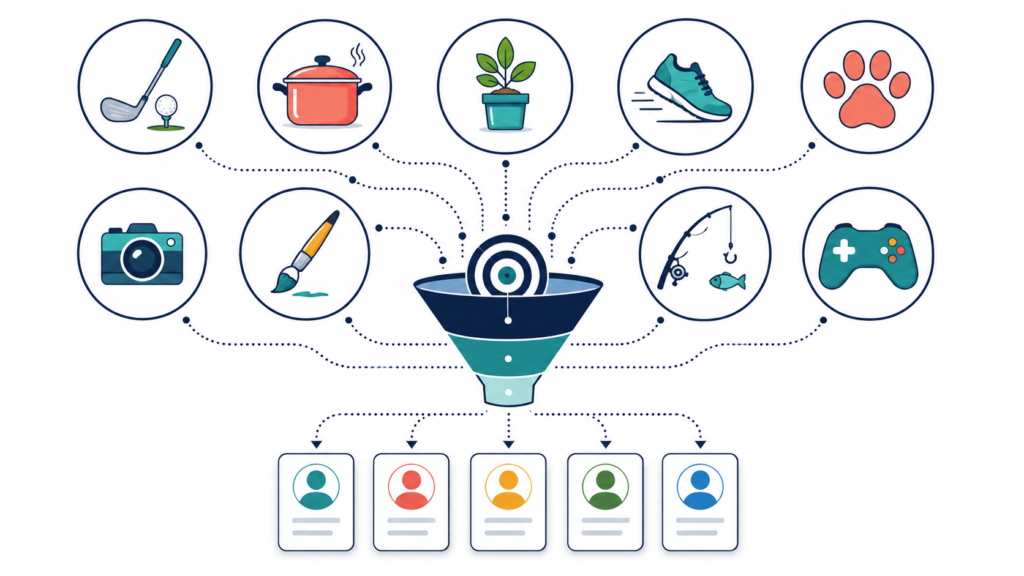
Hobby and interest-based mailing lists are consumer databases segmented by lifestyle passions, recreational activities, and personal interests — from gardening and golf to cooking, fitness, travel, pet ownership, and dozens of other categories. For businesses selling products or services tied to a specific lifestyle, hobby mailing lists deliver something that standard demographic targeting cannot: intent driven by passion.
A consumer who spends their weekends gardening does not just have a hobby — they have an ongoing need for seeds, tools, soil, fertilizer, outdoor furniture, and landscaping services. A fitness enthusiast does not just exercise — they buy supplements, apparel, equipment, gym memberships, and wellness products. Hobby data identifies these consumers based on what they love and how they spend their time, not just their age, income, or ZIP code.
How Hobby and Interest Data Is Collected
Lifestyle and interest data is compiled from multiple sources that capture consumers’ self-reported and observed behaviors. Major sources include magazine and publication subscriptions (a subscription to Golf Digest indicates a golfer; a subscription to Bon Appetit indicates a cooking enthusiast), product purchase history (buying gardening supplies, fitness equipment, or pet food), survey responses and registration forms (many data providers collect interest data through consumer surveys, warranty registrations, and online registration forms), catalog and mail-order activity (consumers who order from specialty catalogs are identified by the product category), event and membership registrations (gym memberships, club affiliations, event ticket purchases), and online behavioral data (website visits, content engagement, and purchase activity in specific categories).
The best hobby lists combine multiple data signals rather than relying on a single source. A consumer identified as a “gardener” by three independent data points — a garden magazine subscription, garden supply purchases, and a garden club membership — is a much stronger target than one identified by a single survey response.
Major Hobby and Interest Categories
Outdoor and Recreation
Fishing, hunting, camping, hiking, boating, birdwatching, RV/motorhome enthusiasts, horseback riding. These consumers spend heavily on equipment, apparel, travel, and memberships. Outdoor recreation is a $1 trillion+ industry in the U.S.
Fitness and Wellness
Gym members, runners, yoga practitioners, cyclists, swimmers, weight training, martial arts. Fitness consumers are consistent repeat buyers of supplements, apparel, equipment, technology (fitness trackers, apps), and wellness services.
Cooking and Food
Home cooking enthusiasts, gourmet food buyers, wine collectors, craft beer enthusiasts, baking hobbyists. These consumers buy specialty ingredients, kitchen equipment, cookbooks, meal kits, cooking classes, and food subscription services.
Gardening and Home
Flower gardeners, vegetable gardeners, landscaping enthusiasts, home decorating, DIY home improvement. Gardeners are highly seasonal buyers — targeting in early spring produces the strongest response rates. New homeowners are often first-time gardeners setting up their yards.
Pet Owners
Dog owners, cat owners, exotic pet owners, equestrian enthusiasts. Pet owners spend an average of $1,500-$3,000+ per year on their animals, making them valuable targets for pet food, veterinary services, grooming, insurance, boarding, toys, and accessories.
Golf
Golf is one of the highest-value hobby segments because golfers tend to be affluent, brand-loyal, and willing to spend on equipment, apparel, club memberships, travel, and instruction. Golf lists often overlap with high-net-worth investor data due to the demographic profile of avid golfers.
Travel
Frequent travelers, cruise enthusiasts, adventure travelers, luxury resort guests, vacation homeowners. Travel data is valuable for airlines, hotels, tour operators, travel insurance, luggage brands, and destination marketing organizations.
Arts and Crafts
Quilting, knitting, scrapbooking, painting, woodworking, pottery. Arts and crafts consumers are passionate repeat buyers who frequent specialty retailers, attend workshops, and subscribe to craft-specific publications and online communities.
Reading and Education
Book club members, audiobook subscribers, continuing education students, self-improvement enthusiasts. Reading data can be segmented by genre preference — business, self-help, fiction, history, science — for highly targeted offers.
Technology and Gaming
Video game enthusiasts, PC builders, drone hobbyists, home automation enthusiasts, electronics early adopters. Tech hobbyists are high-frequency buyers who upgrade equipment regularly and respond to new product launches.
Why Hobby Targeting Outperforms Demographics Alone
Standard consumer mailing lists target people by who they are — age, income, location, homeownership. Hobby lists target people by what they do and what they care about. This distinction matters because shared interests are often stronger purchase predictors than shared demographics.
Consider two 45-year-old homeowners with $100,000 household incomes living in the same ZIP code. Demographically, they are identical. But one is an avid golfer who spends $5,000 a year on equipment and memberships, while the other has never held a club. A golf equipment company mailing to the demographic profile wastes money on the non-golfer. A company mailing to the hobby profile reaches only the buyer.
Hobby data adds a behavioral dimension to demographic targeting. The strongest campaigns combine both — targeting consumers who match your demographic profile AND demonstrate interest in relevant lifestyle categories.
How to Use Hobby Mailing Lists Effectively
Match Your Product to the Passion
The most effective hobby-targeted campaigns connect your product directly to the consumer’s interest. Do not just sell a product — sell how it enhances the hobby. A lightweight camping stove marketed to “outdoor enthusiasts” performs better than the same stove marketed generically to “homeowners aged 30-55.”
Layer Hobby Data with Demographics
Combine interest-based targeting with demographic and geographic filters for maximum precision. Target golfers within 20 miles of your course. Target gardeners who own homes valued above $300,000 for premium landscaping services. Target fitness enthusiasts with household incomes above $75,000 for premium gym memberships.
Time Your Campaigns Seasonally
Many hobbies have seasonal peaks. Gardening peaks in spring. Golf peaks in late spring and summer. Fitness peaks in January (New Year’s resolutions) and late spring (summer body preparation). Hunting and fishing peak before their respective seasons. Aligning your campaigns with seasonal interest patterns increases response rates.
Use Multichannel Outreach
Direct mail catalogs and postcards work exceptionally well for hobby audiences because the physical format invites browsing — consumers enjoy looking through products related to their passion. Follow up with email for additional product details, tutorials, and seasonal promotions. Use SMS for flash sales and event announcements.
Industries That Benefit Most from Hobby Mailing Lists
Specialty retail and e-commerce: Companies selling hobby-specific products (outdoor gear, cooking equipment, pet supplies, craft materials) use interest data to reach consumers who actually buy in their category.
Subscription services: Meal kits, wine clubs, book clubs, craft boxes, and pet subscription services use hobby data to identify consumers most likely to subscribe and retain.
Travel and hospitality: Resorts, cruise lines, and tour operators use travel interest data to target consumers who have demonstrated a propensity to travel.
Health and wellness brands: Supplement companies, fitness apparel brands, and wellness service providers use fitness and wellness interest data to reach active, health-conscious consumers.
Financial services: Insurance companies, financial advisors, and premium credit card issuers use hobby data as a proxy for lifestyle spending — consumers with expensive hobbies (golf, boating, equestrian, travel) correlate strongly with high disposable income.
Frequently Asked Questions
What is a hobby mailing list?
A hobby mailing list is a consumer database segmented by lifestyle interests and recreational activities. Consumers are identified as participants in specific hobbies — gardening, golf, fitness, cooking, pet ownership, travel, and dozens of others — based on their subscription, purchase, survey, and behavioral data.
How accurate is hobby and interest data?
Accuracy depends on the number and quality of data signals used to identify each consumer’s interests. Lists built from multiple verified sources (subscriptions, purchases, memberships) are more accurate than single-source survey data. Work with a list broker who can explain how their hobby data is sourced and validated.
Can I combine hobby targeting with demographic filters?
Yes, and you should. The strongest campaigns layer hobby data on top of demographic and geographic filters. For example: golfers + household income above $100K + within 30 miles of your location. This combination of interest, financial qualification, and proximity produces the highest response rates.
What hobby categories are available?
Major categories include outdoor recreation (fishing, hunting, camping, hiking, boating), fitness and wellness, cooking and food, gardening, pet ownership, golf, travel, arts and crafts, reading, technology and gaming, collecting, photography, music, and motorsports. Most list brokers offer 50-100+ distinct interest categories.
How much do hobby mailing lists cost?
Hobby and interest lists are typically priced as specialty consumer data — higher than basic compiled lists but competitive with other behavioral data products. Pricing varies by volume, category specificity, and channel. Contact a list broker for a custom quote.
Reach Consumers Who Care About What You Sell
Hobby and interest data turns generic consumer marketing into precision targeting. At ProMarketing Leads, we build hobby and interest-based mailing lists from our network of lifestyle data providers — giving you access to consumers identified by what they love, not just who they are.
Contact us today for a free consultation. Call (866) 397-2772 to speak with a list expert.