A new business mailing list is a targeted database of companies that have recently been registered, incorporated, or filed for business licenses — typically within the past 1-12 months. For any company that sells products or services to other businesses, new business mailing lists represent one of the highest-intent B2B audiences available, because new companies buy more in their first year of operation than at virtually any other time.
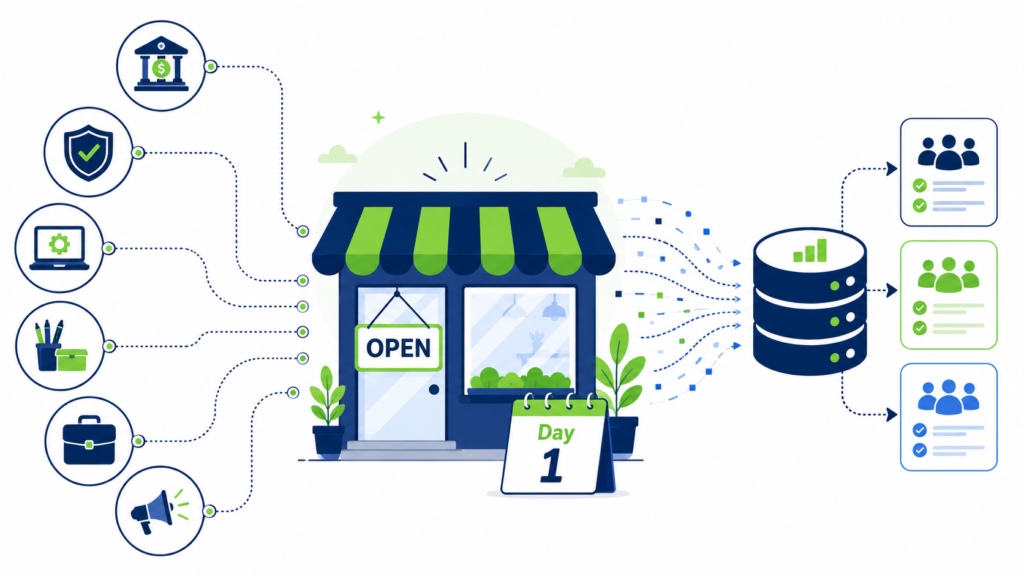
A business that opened its doors last month needs everything: banking, insurance, accounting, legal services, technology, office equipment, marketing, signage, commercial cleaning, payment processing, and dozens of other products and services. Reaching these companies in their first 30-90 days puts your offer in front of a buyer who is actively making purchasing decisions — not a prospect who might need your product someday.
Why New Businesses Are High-Value Prospects
New businesses are fundamentally different from established companies as marketing targets. Several factors make them exceptionally responsive to outreach:
Active purchasing mode. A company in its first months is setting up its entire operational infrastructure from scratch. They have no existing vendor relationships, no multi-year contracts, and no switching costs. Every product category is an open opportunity.
Decision-maker accessibility. In a new business — particularly small businesses and sole proprietorships — the founder or owner is typically the sole decision-maker. There is no committee, no procurement department, and no six-month approval process. The person who opens your mail or answers your call is the person who signs the check.
No incumbent vendor loyalty. Established businesses have existing relationships with vendors who have earned their trust over years. New businesses have no such loyalty. Your offer competes on merit alone, not against entrenched relationships.
Higher response rates. Because new businesses are actively seeking solutions, response rates for new business lists tend to outperform standard business mailing lists for the categories these companies are buying.
Where New Business Data Comes From
New business mailing list data is compiled from public records filed when a business is formally established. Sources include state Secretary of State filings (incorporations, LLC formations, DBA registrations), county and municipal business license applications, federal EIN (Employer Identification Number) registrations, professional license filings, and franchise disclosure filings.
The quality of a new business list depends heavily on how quickly the data is compiled after the filing. The best providers process new filings weekly or biweekly, delivering fresh data within days of the business being registered. A provider who updates monthly or quarterly is delivering data that may already be 30-90 days old — and by that point, many competitors have already reached the business owner.
What Is Included in a New Business Mailing List?
A standard new business list includes the business name, owner or principal name, business mailing address, phone number (when available), email address (when available), filing date or registration date, business type (LLC, corporation, sole proprietorship, partnership), SIC or NAICS industry code, state of incorporation, and county of registration.
Some providers also include additional data points such as estimated employee count (typically 1-4 for new businesses), franchise indicator, home-based vs. commercial address indicator, and the specific filing type (new incorporation, DBA, trade name, professional license).
Key Targeting Filters
Business age / filing date. Filter by how recently the business was registered. The freshest data (0-30 days old) commands premium pricing but produces the highest response rates. Data that is 30-90 days old is the sweet spot for most campaigns — fresh enough to be highly responsive, priced more competitively than week-old data.
Industry (SIC/NAICS code). If your product or service is industry-specific, filter by the new business’s classified industry. A commercial insurance broker might target new restaurants, construction companies, and medical practices. A POS system vendor might target new retail stores and food service businesses.
Geography. Filter by state, county, city, or ZIP code. Local service providers should target new businesses within their service radius. National companies can prioritize states or metros with the highest new business formation rates.
Business type. Filter by entity type — LLC, corporation, sole proprietorship, or partnership. Different entity types correlate with different business sizes, ambitions, and product needs.
Home-based vs. commercial. Some providers can distinguish between businesses registered at a home address versus a commercial address. This filter is valuable for companies selling office furniture, commercial leases, or facility services.
Who Uses New Business Mailing Lists?
Banking and Financial Services
Banks, credit unions, and merchant services companies use new business lists to offer business checking accounts, credit cards, lines of credit, and payment processing — products that every new business needs immediately.
Insurance Providers
Commercial insurance agents use new business data to offer general liability, workers’ compensation, professional liability, and business owner’s policies to companies that are legally required to carry coverage.
Accounting and Tax Services
CPAs and bookkeeping firms target new businesses that need to set up their financial systems, establish payroll, and navigate first-year tax obligations.
Technology and SaaS Companies
Software companies selling CRM systems, accounting software, project management tools, email platforms, and website builders target new businesses building their technology stack from scratch.
Office Supplies and Equipment
Companies selling furniture, computers, printers, phone systems, and office supplies target businesses setting up their first workspace.
Marketing and Advertising Services
Marketing agencies, website designers, SEO companies, and print shops target new businesses that need to establish their brand presence and start generating customers.
Legal Services
Business attorneys target new companies that need operating agreements, contracts, trademark filings, and regulatory compliance guidance.
Commercial Real Estate
Commercial brokers and coworking spaces use new business lists to identify companies that may need office, retail, or warehouse space.
Best Marketing Channels for New Business Outreach
Direct mail is highly effective for new business marketing because a professional mail piece addressed to the owner by name establishes credibility and stands out during the chaotic early months when the owner is overwhelmed with digital noise.
Email marketing works well for follow-up sequences — sending educational content, welcome offers, and getting-started guides after an initial mail piece. Comply with CAN-SPAM requirements.
Telemarketing is powerful for new business outreach because the owner typically answers the phone personally (no gatekeepers). A well-timed call from a vendor offering something the business actually needs will often result in an immediate conversation.
Multichannel sequences work best: send a direct mail welcome piece, follow up with an email 3-5 days later, then call 2-3 days after the email. This three-touch approach reaches the business owner through multiple channels during their peak buying window.
Data Freshness: Why It Matters More for New Business Lists
Data freshness is important for all mailing lists, but it is critical for new business data. The value of reaching a new business decreases rapidly with time. In the first 30 days, the business is making its most urgent purchasing decisions. By 90 days, many foundational purchases have been made and vendor relationships are starting to solidify. By 6-12 months, the business has established most of its vendor relationships and is far less responsive to cold outreach.
When evaluating a new business list provider, ask specifically how frequently new filings are compiled and how quickly data is available after filing. Weekly updates are the gold standard. Monthly updates are acceptable. Quarterly updates are too slow for time-sensitive new business marketing.
Frequently Asked Questions
What is a new business mailing list?
A new business mailing list is a database of recently registered companies compiled from state filings, business license applications, and EIN registrations. It includes business name, owner name, address, phone, industry code, filing date, and entity type.
How fresh is new business data?
The best providers compile new filings weekly, making data available within days of registration. Monthly compilation is common but less ideal. For maximum response rates, target businesses registered within the past 30-90 days.
Which industries benefit most from new business lists?
Banking, insurance, accounting, legal services, technology/SaaS, office equipment, marketing services, and commercial real estate see the strongest results because every new business needs these products and services immediately.
Can I filter new businesses by industry?
Yes. New business lists can be filtered by SIC or NAICS industry code, geographic location, entity type, and filing date. This allows you to target, for example, new restaurants within 25 miles of your location that were registered in the past 60 days.
How do new business lists compare to standard business lists?
New business lists target companies in their peak purchasing window (first 1-12 months) when they have no existing vendor relationships. Standard business mailing lists target established companies that may already have entrenched vendor relationships. New business lists typically produce higher response rates for foundational products and services.
Reach New Businesses Before Your Competitors Do
The first vendor to reach a new business owner often wins the relationship. At ProMarketing Leads, we deliver fresh new business mailing lists compiled from state filings and business registrations — filtered by industry, geography, entity type, and filing date so you reach the right companies in their peak buying window.
Contact us today for a free consultation. Call (866) 397-2772 to speak with a list expert.